Fast, reliable diagnostics and component-level repair for all Japanese, European, engine control units (ECUs).
Professional ECU & Car Computer Repair Services in Kampala, Uganda
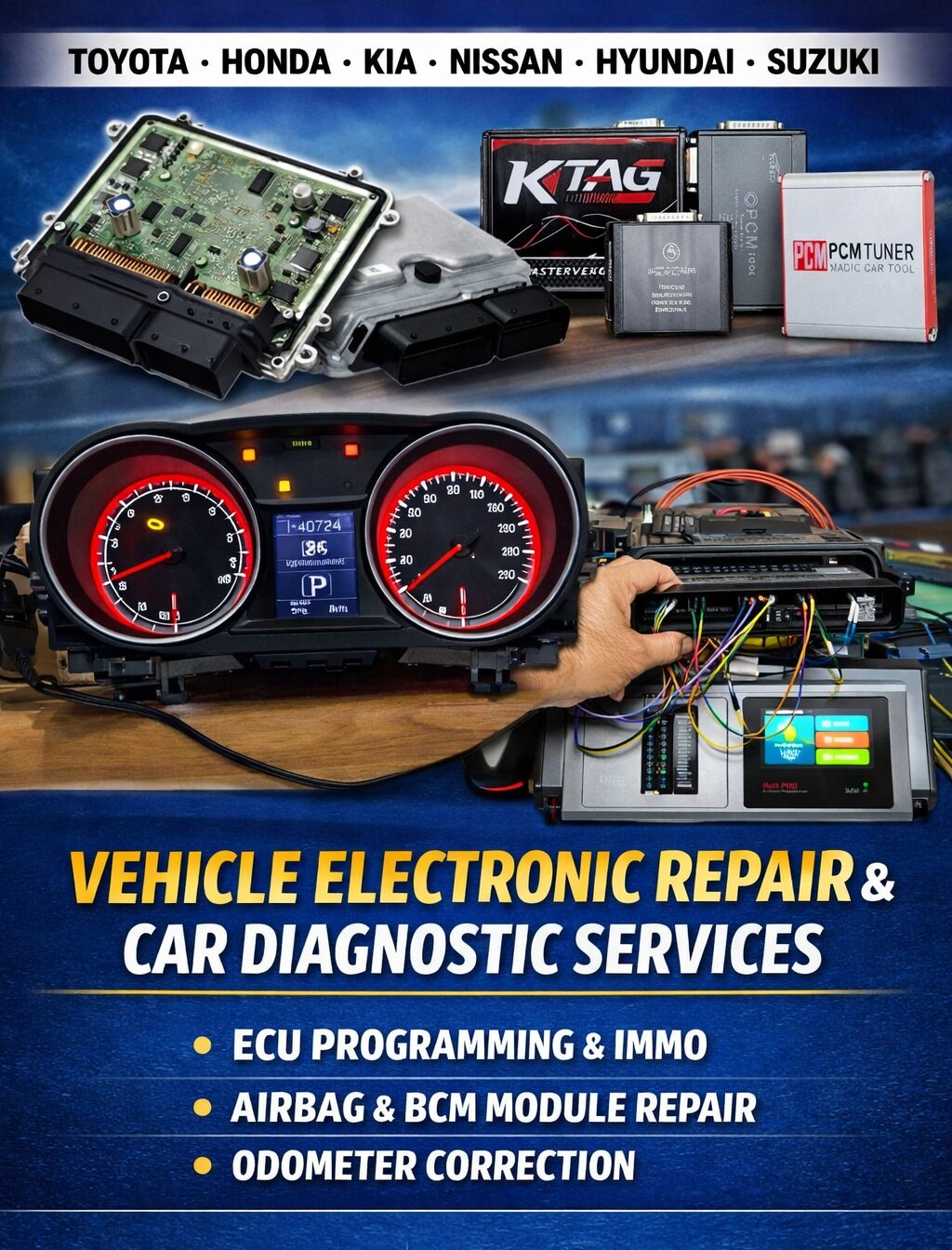
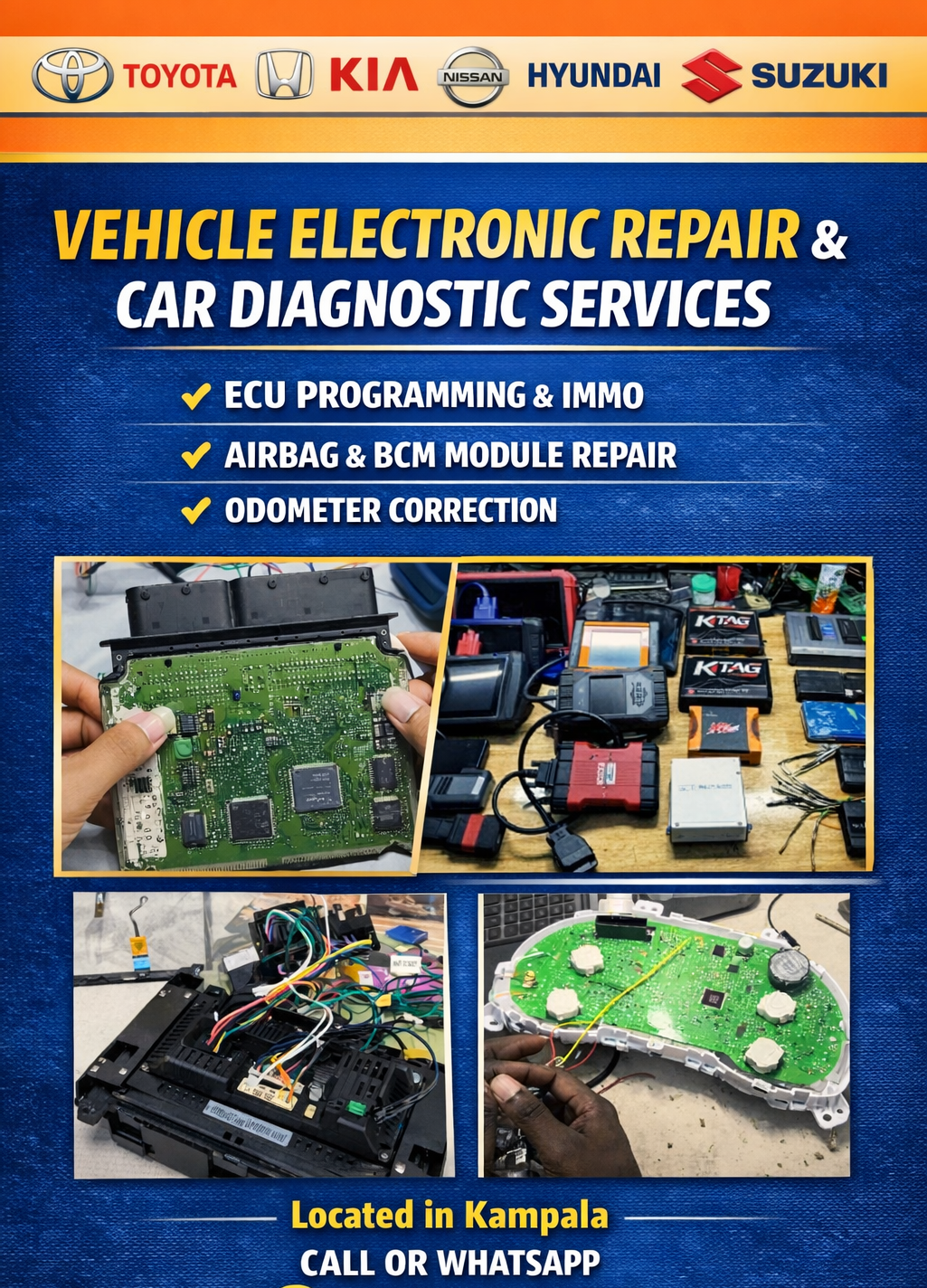
Fast, reliable diagnostics and component-level repair for all Japanese, European, and American vehicle engine control units (ECUs). Don’t buy an expensive new “car brain” — we can fix it.
Is Your Vehicle Experiencing “Car Brain” Symptoms?
Many modern vehicles on Ugandan roads suffer from sudden computer glitches caused by rough terrain, vibration, deep potholes, dust, moisture damage, or incorrect jump-starting procedures.
The Check Engine light stays permanently on or flashes erratically.
Engine misfires, sluggish acceleration, or poor fuel economy.
The vehicle refuses to crank or start despite having a healthy battery.
Advanced Bench Testing, Coding & Hardware Repairs
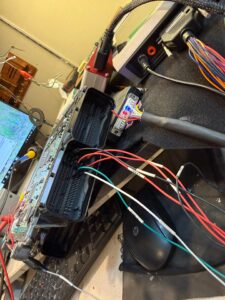
We do more than basic code scanning. Our technicians operate at a component level using advanced ECU diagnostic tools.
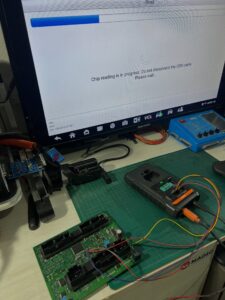
ECU Diagnostic & Bench Testing
Real-time live data analysis, circuit tracing, and breakout box testing.
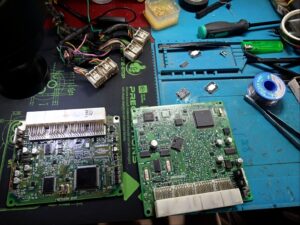
Hardware Fixes & Component Replacement
PCB repairs, injector drivers, capacitor replacement, and communication line restoration.
ECU Programming, Remapping & Cloning
Immobilizer data transfer, VIN programming, and ECU cloning solutions.
Specialized Computer Repair for Uganda’s Popular Car Brands
We diagnose and repair ECUs for many vehicles commonly driven across Kampala and Uganda.
Toyota & Lexus
Harrier Hybrid, Premio, Fielder, Land Cruiser, Prado, Vitz
Subaru
Forester, Outback, Impreza, Legacy, XV, WRX
European Vehicles
Mercedes-Benz, BMW, Audi, Volkswagen (VW), Porsche
Frequently Asked Questions About ECU Repair
Can a damaged car computer be repaired?
In over 80% of cases, faulty ECUs can be repaired successfully at a component level.
How long does ECU repair take?
Most ECU repairs take 1–2 business days.
Need Professional ECU Diagnostics or Car Computer Repair in Kampala?
Avoid unnecessary ECU replacement costs. Contact our technicians today.
“`
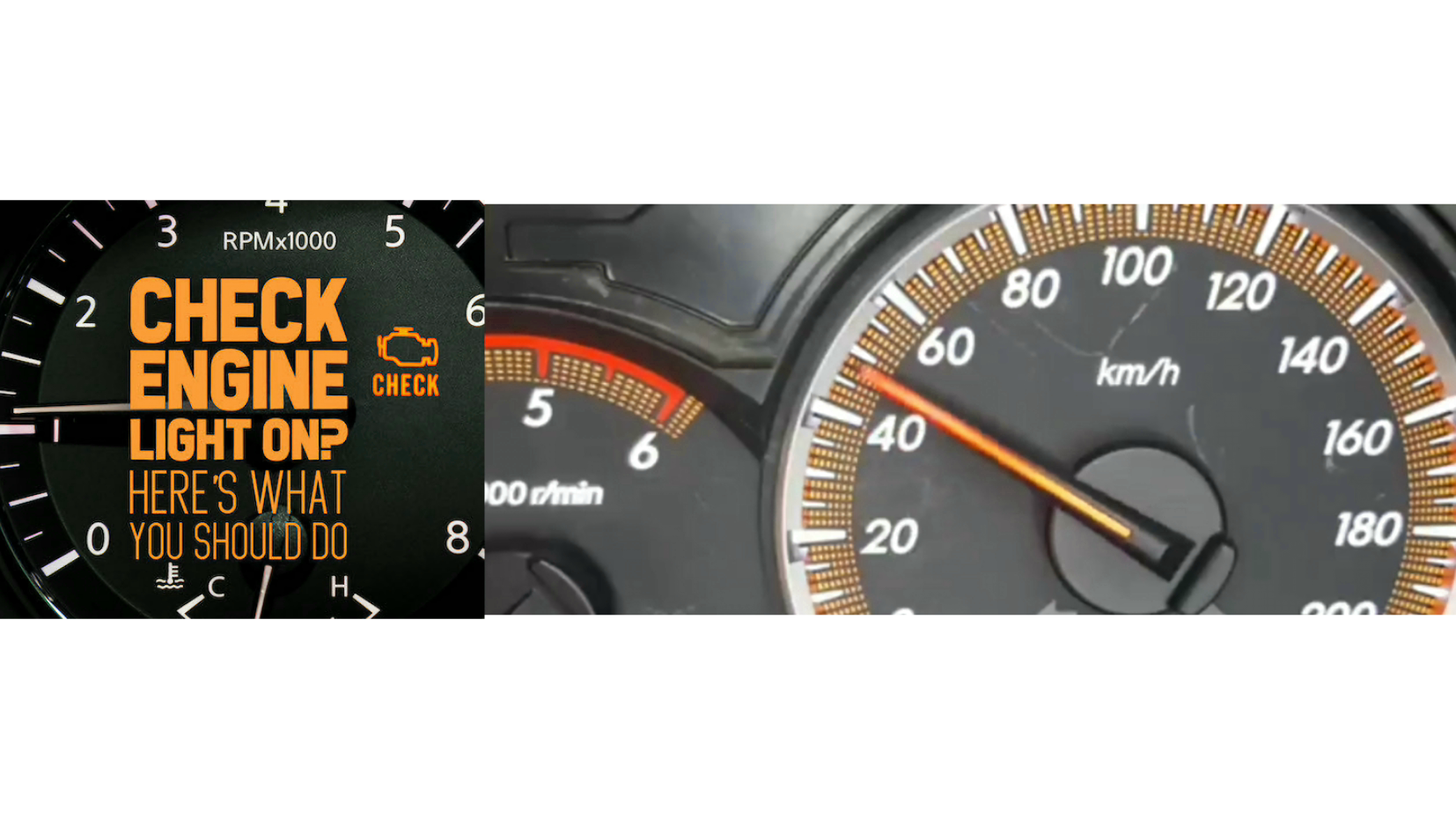
Why Your Check Engine Light is On: The Kampala Driving Reality
Driving in Kampala, Uganda introduces some very specific local environmental and logistical factors that make certain culprits much more common than they might be elsewhere. Here is how Kampala’s unique driving conditions, fuel quality, and environment directly impact your check engine light:
1. Local Fuel Quality Issues (The Most Common Culprit)
While a “bad tank of gas” is a general cause, in Kampala, fuel quality is one of the leading triggers for engine lights.
Adulterated or Dirty Fuel: It is not uncommon to accidentally fuel up with petrol or diesel that has been mixed with kerosene, or contains high amounts of sulfur and moisture.
2. Extreme Dust and Potholes
Kampala’s unpaved side roads, ongoing construction, and dry-season dust take a heavy toll on a vehicle’s intake system.
Clogged Air Filters & MAF Sensors: The intense dust quickly clogs air filters. When dust bypasses the filter, it coats the delicate wires of the Mass Airflow (MAF) Sensor, leading to faulty readings.
Vibration Damage: Bumping through Kampala’s notorious potholes can physically loosen electrical connectors, exhaust mountings, or even crack a brittle, aging vacuum hose, instantly triggering a light.
3. Constant Stop-and-Go Traffic (The Jam)
Spending hours idling in gridlock on Jinja Road, Northern Bypass, or Makerere Hill creates unique mechanical stress.
Carbon Buildup: Engines are designed to run efficiently at higher speeds. Constant idling causes incomplete combustion, leading to heavy carbon soot buildup. This quickly clogs your EGR (Exhaust Gas Recirculation) valve and catalytic converter.
Overheating: The stop-and-go traffic puts immense pressure on the cooling system. A failing Engine Coolant Temperature sensor or a struggling radiator fan will easily trigger a warning light here.
4. The “Exhaust Modification” Factor
Many vehicles imported into Uganda are older, used models (often from Japan). Over time, or due to fuel issues, the catalytic converters fail. Because replacing them with OEM parts is incredibly expensive in Kampala, some local garages simply remove the interior of the catalytic converter (“gutting” it) or weld a straight pipe in its place.
What to do in Kampala:
- Stick to Trusted Fuel Stations: Try to fuel up at major, reputable stations (like TotalEnergies or Shell) rather than smaller, independent unbranded stations to minimize the risk of dirty fuel.
- Get an OBD2 Scan: Do not let a mechanic guess and start replacing expensive parts blindly. Many modern garages in places like Industrial Area, Wandegeya, or Nakawa have diagnostic scanners that will tell you the exact error code (e.g., P0300 for a misfire).